Industry
HVAC safety documents for contractors
Rooftop access, refrigerants, electrical isolation and mechanical rooms.
Safety documentation for hvac work
HVAC contractors move between rooftop units, occupied buildings and mechanical rooms. A rooftop replacement needs a different work plan from a furnace service call. SafeTask helps crews draft, review and share task-specific safety documents so the job steps, hazards and controls stay together.
What belongs in an HVAC JSA or JHA?
A job safety analysis (JSA) or job hazard analysis (JHA) breaks a task into steps, identifies hazards at each step and records the controls the crew will use. The names are often used for similar task-planning documents. For an HVAC job, that might mean planning roof access, isolating electrical energy, handling refrigerant and checking the unit before restart. The site supervisor or other authorized reviewer must check the draft against the actual equipment and work conditions.
Common hazards to document
Typical examples only — every site is different and a competent person must assess the actual job.
- Roof access, edges and changing weather
- Electrical isolation and verification before opening equipment
- Refrigerant release and handling during service
- Lifting, rigging and positioning heavy units
- Brazing, hot work and work around occupied spaces
Documents you can create
HVAC JSA or JHA
Map access, isolation, servicing and restart into steps, hazards and proposed controls for a rooftop unit, furnace or ventilation job.
Equipment and site inspections
Use checklists to record observations, photos, findings and corrective-action follow-up during service work.
Products and SDS records
Keep refrigerants and other products used on a job visible in the document, with SDS attachments where relevant.
Crew review records
After an authorized user approves a document, share its QR code and record who acknowledged that revision.
Where the work happens
HVAC teams can plan work at an active field jobsite, a company yard or loading area, and a headquarters or office. A yard document might address loading, material handling and vehicle routes; an office inspection might cover walkways, workstations, visitors and emergency arrangements. Select the actual work area and task so the draft or checklist stays relevant. These are examples, not a claim that every hazard applies to every workplace.
Use the same plan across the job
Draft a task-specific HVAC JSA or JHA for an installation, replacement or service visit, then review the hazards and controls with the crew. Record inspection findings and follow-up actions separately where needed. Once approved, the document can be shared as a PDF or by QR code for worker acknowledgement; revisions keep earlier versions distinguishable.
SafeTask supports Canadian and US work locations, but requirements vary by province, territory, state, site and task. Select your work location and verify any applicable rules with a qualified person; the tool does not certify an HVAC job or replace your procedures.
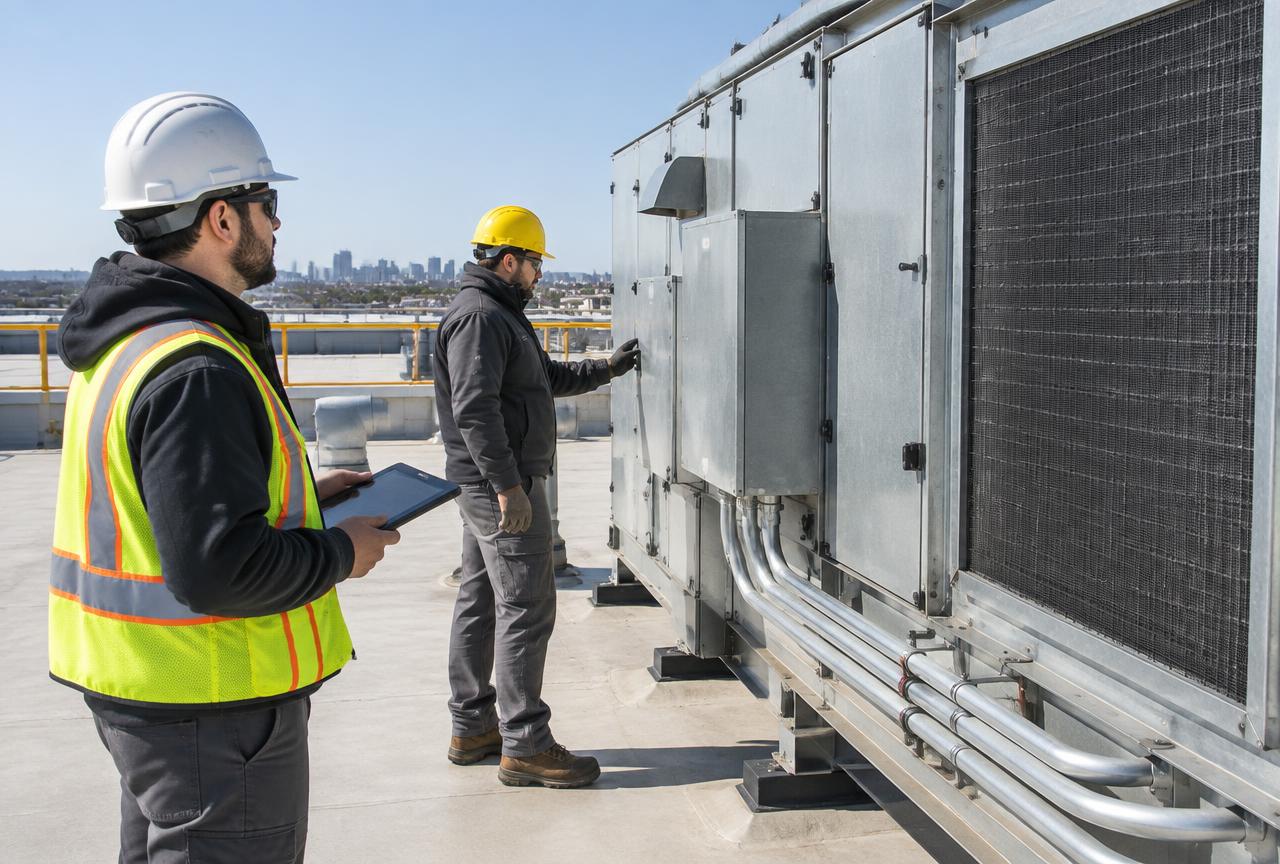
Example: rooftop unit service call
A JSA breaks the job into ordered steps; SafeTask then helps you list hazards, rate risk and choose controls for each one.
- 01Confirm roof access, weather and the work area
- 02Identify energy sources and plan isolation and verification
- 03Open and inspect the unit; record refrigerant and electrical hazards
- 04Service components using the controls selected for this site
- 05Replace guards, restore power and test operation
Regulatory references in hvac documents come from the SafeTask regulatory knowledge base, each with an official source and last-verified date. Where a requirement cannot be verified, the document shows REGULATORY VERIFICATION REQUIRED instead of a fabricated citation. AI drafts are a starting point; the employer or an authorized user reviews and approves every document.
SafeTask provides AI-assisted safety documentation and regulatory information for workflow support. It is not a law firm, regulator or substitute for qualified safety or legal advice. Users are responsible for reviewing documents and verifying applicable requirements for their workplace and jurisdiction.